
Sanctity is a word often used to describe the gift of life, beginning at conception and birth. The dictionary defines the meaning as ‘to be holy, or of deserving great respect’.
The sanctity of life has always been a cornerstone of civilization. Human life is precious, it is a gift, it is wondrous in its complexity, it is a creative miracle that continues to tease and intrigue scientists, philosophers, psychologists, and theologians in their quest to understand and explain.
The sanctity of human life until very recently, was rooted in the universal belief that God is the Creator of life and that all human existence emanates from Him. Depending on one’s worldview the origin of our species is now widely disputed and contested. Be that as it may, the sanctity of life remains a core value guiding and informing our laws, relationships, and rules of engagement at every level of society.

Sometimes there is a passionate debate about the sanctity of life from conception to birth, and then it wanes somewhat after the infant matures. This is particularly evident in war, impossible to ignore at present in the atrocities in Ukraine and Gaza. How did we get here? To a place where soldiers are expendable, children and civilians are collateral damage, and sanctity is brushed aside as an old fashioned term not applicable in this situation? In other words sanctity of life is no longer a universal bedrock truth (if it ever has been) and is more relative and appropriate for some people/races/nations than others.
When sanctity is lost all hell breaks loose. It’s the survival of the fittest, or the richest, or the most powerful. Loss of life becomes a regrettable cost as we battle for the welfare of the greater good. It invariably demands that others must sacrifice, die, or suffer, so that my righteous agenda will prevail. ‘The other’ is objectified or dehumanized with labels such as: the enemy, terrorists, or whatever serves our purpose to vilify ‘them’ and de-sanctify their worth. Of course, none of that applies when my son or daughter, or father or mother, is involved; or I am at the center of the turmoil.
Sanctification snatched from the hand of God and held by humans is quickly reduced, selective, conditional, and highly subjective. It is seldom far removed from injustice, censorship, oppression, and violence. Yet that is what we now accept as ‘the real world’.
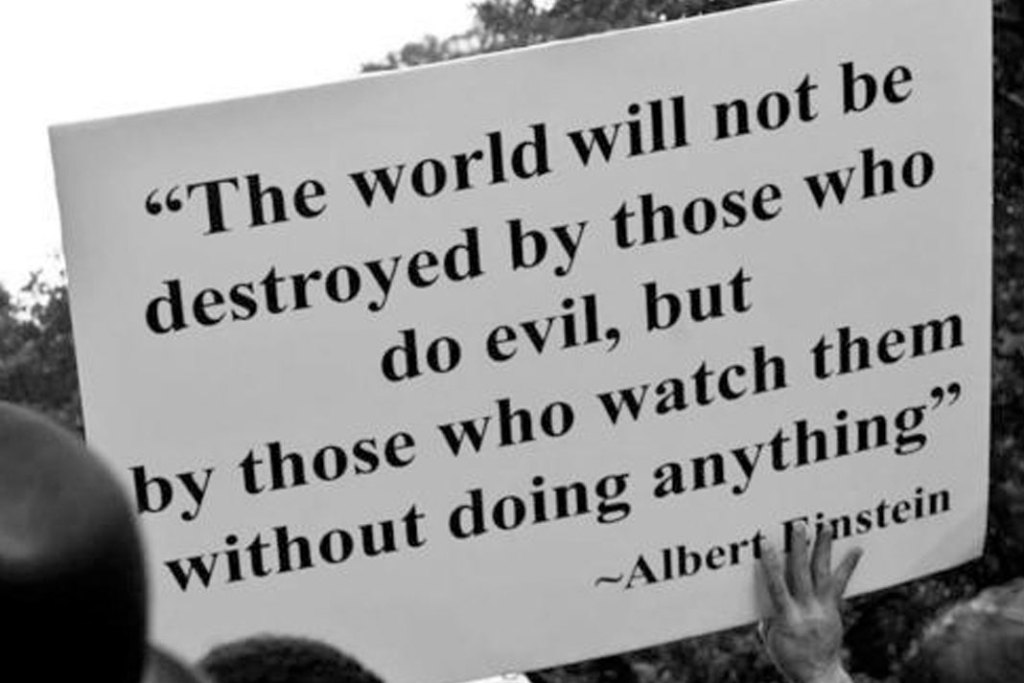
Saddest of all is that those who profess faith in God, the giver of life, the source of our sanctity, speak in a mere whisper while others from the same flock support political agendas seeking to impose values on others. The children of God and followers of Jesus should be offended and mortified whenever, and wherever, the sanctity of life is challenged or disregarded. Sanctity of life is not restricted to a debate about abortion, it embraces the whole of life from womb to tomb. It’s not political to be angered and indignant about the rape of Ukraine or the genocide in Gaza. Or to be fair, the abuse of rural Russians for Putin’s war machine, or the brainwashing of young Israelis to serve in the IDF. We could no doubt name every country on earth with examples of the horrors of twisted thinking that de-sanctifies and desensitizes.
How de-sensitized and de-sanctified have we/I become?
Remember Sodom and Gomorrah? Two cities in ancient times that were described as very wicked and subject to God’s judgement. Abraham conversed with God and asked, “If I can find 5 righteous people in the cities will you not spare them?” They talk back and forth moving from fifty righteous people to ten. The implication is that for the sake of a few, many can be saved. That theme is continued through the life, death, and resurrection of Jesus. His birth is announced by John: “God so loved the world that he gave his only son, that whoever believes in his shall have eternal life.”
Jesus, suffering unjustly on the Cross, his life de-sanctified by Jewish leaders and Romans, responds by extending God’s love to all: “Father forgive them, they do not know what they do.”
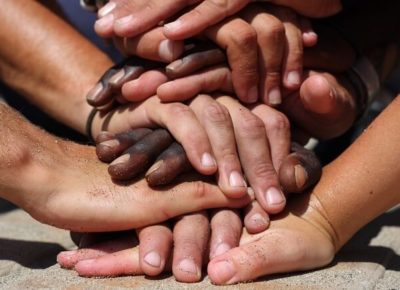
The hallmark of the Spirit of God on earth is holding a high regard for the sanctity of all life, those of my tribe, and those with whom I profoundly disagree. It doesn’t come naturally, and I’m not sure it can be sustained when facing violent opposition or death without supernatural strength, courage, and grace.
Our rhetoric matters, our conversations matter, our mutual respect matters. No one is above the law or gets a free pass: whether you are Trump, Biden, Trudeau, (any other name you want to add), Israel, Hamas, you, or me. We’re all subject to gravity and we’re all subject ultimately to the reality of truth prevailing.
Mike Bird (theologian and journalist) writes in an article entitled: Shall the Tyrants Win?
Death is the tyrant’s ultimate weapon to terrorize, to force people to suffer in silence, to make them accept enslavement and despotism as normal and unchangeable. But the promise of resurrection means that God intends to undo whatever the tyrant does. The worst of evil is no match for resurrection. The goodness of God’s power and the power of God’s goodness always defeats death. God’s promise of resurrection is not pious longing, but a political doctrine, the hope for creation to be renewed, powers to be reconciled, and all things to be put to rights.
Faith in God’s life-giving power is our defiance against evil powers, “against the leaders, against the authorities, against the powers that rule the world in this dark age, against the wicked spiritual elements in the heavenly places”, as St Paul writes. And defiance is contagious.
P.S. I have just finished reading, The General’s Son – Journey of and Israeli in Palestine. by Mike Peled. If you want a first-hand account of the history and struggle between Israel and Palestine over the past fifty years you might read this clear and deeply troubling book. The author’s journey from ignorance and prejudice to reconciliation and a love for both Palestinian and Jew.



 Googling God
Leave a comment