
For those of us who live in North America, it has been quite a week. As the dust settles we’re left pondering the detritus(waste or debris) scattered in the slipstream of current events.
What to make of it all?
The race between Harris and Trump was portrayed by some as a choice between good and evil. How do good people vote for a man like Trump and allow such a complete victory? What was Harris missing? Don’t worry, this is not a political party bashing exposition, not even close. The principles described below apply to every political party in every country.
As I’ve reflected, observed, and listened, an old familiar pattern has become increasingly visible; one that transcends party political lines. It’s a pattern that has challenged and teased every human endeavor, including those in church and spiritual arenas.
The bottom line? People, all of us, want to feel seen, heard, and considered in our daily lives. What does that mean for politics and the church?
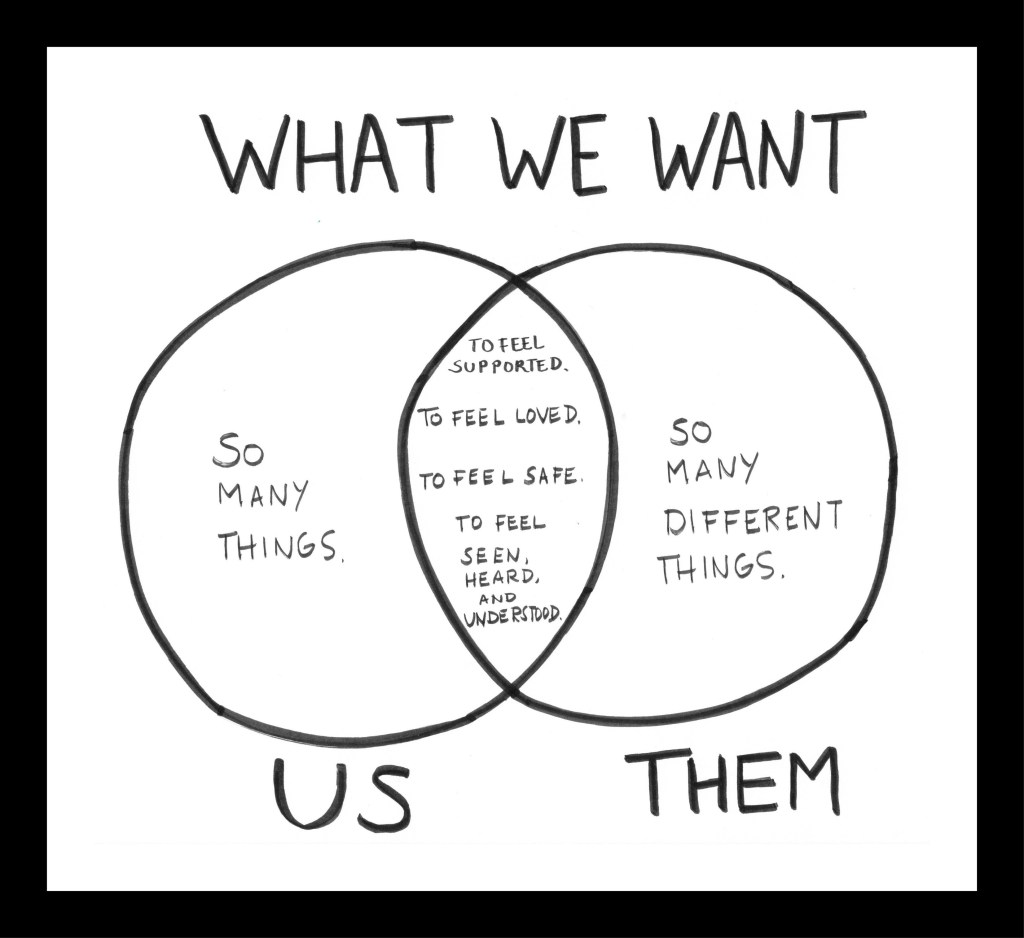
The party that lost in the election last week had wonderful rhetoric. Lifting people up, being kind, drawing differing sides together around the table, being gracious to those who oppose. However, in the final analysis, there was a perceived disconnect between words and personal experience.
Ordinary people had no appetite to philosophically discuss democracy, joy, warm feelings, and unity – in isolation. They wanted to know how they could make ends meet from pay cheque to pay cheque. How are we going pay grocery bills, maintain security, feel safe, have hope for our future? Those speaking the words (the party in power) have had four years to make changes and we haven’t felt the change of which you now speak. Why? The sense of not being seen or heard caused voters to look elsewhere, even choosing to ignore blinking red warning signs as they grasped for answers from ‘anyone but them’.
The other side was advocating tough, pragmatic approaches to the challenges of life. Muscle, money, and even military, will be used to accomplish our goals. Legislation will ban abortion, throw out illegal immigrants (and legal perhaps), bring the bible back to schools. No abstract philosophy here; practical solutions, “whether you like it or not”.
The church has been making the same mistakes for many years. Talking of love and a good God while packaging the message in straitjackets of rules, judgements, and stuff that makes no sense in some quarters. A huge disconnect between church and real life. Another branch housed beneath the broad Christian umbrella highlights love and compassion, tenderness, and acceptance to others. “Can’t believe much of the Bible these days.” People join and leave church on a perpetual merry-go-round, enamored and inspired, disillusioned and angry. It doesn’t take long.
All sides tend to cherry-pick from God’s buffet, carefully selecting the tasty bits that appeal, and brushing aside what is not so attractive; indeed it offends!
In these hostile environments we are reduced to slogans, name-calling, demonizing the other, and constructing walls. In the church/politics we live in bubbles, divide the world into us and them, secular and sacred, Protestant or Catholic, Pentecostal, Charismatic, conservative or liberal. Everyone claims God is on their side, in our corner, our inspiration and bedrock. All our labels and identities (both political and religious) are a testimony to our paltry attempts at organizing ourselves while living on earth, having declared independence from God. And where God is mentioned, it’s a private matter.
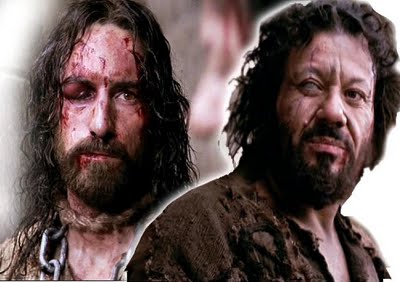
The problem, this divisive and disagreeable pattern, speaks volumes about the bankruptcy of humanity and reflects precious little of the character and heart of God. When push comes to shove we always vote for Barabbas rather than choose to follow Jesus. Barabbas makes more sense, gets things done, he’s a real man, and fights a good fight. Barabbas challenges the establishment, and helps us justify our indignation, anger, and even violence against ‘the other/the enemy’.
Jesus challenges us – and there’s a world of difference in how we hear and receive. Barabbas blames others and offers to do battle to overcome ‘them’. Jesus invites us to self-reflect, take responsibility, and leads the way by laying down his life first – for the sake of others.
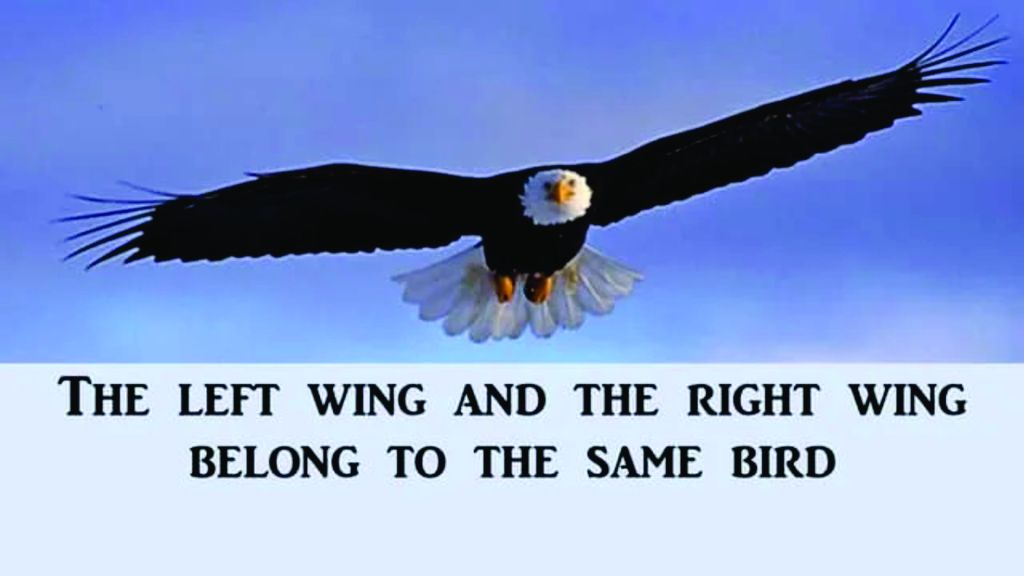
The universal solution among humans trying to ‘be’ is found in reaching across the aisle and meeting in the middle. We need a combination of tough pragmatism and unconditional love. The most powerful and real example of such an approach is costly, often sacrificial; as embodied in Jesus’ life, death, and resurrection. The right is cruel and merciless when not linking arms with the left. The left is empathic, idealistic, and often impractical without the strength offered by the right.
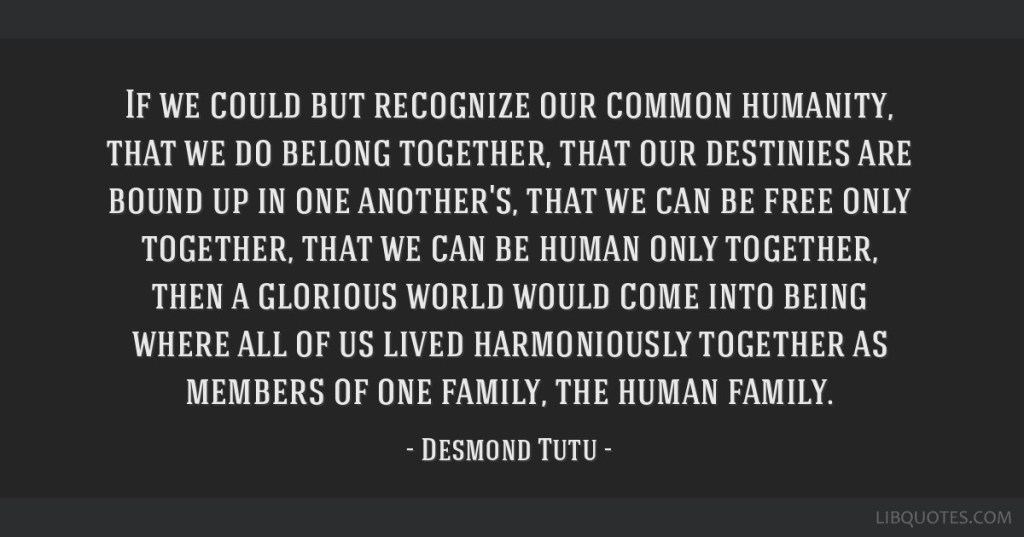
When God surveys and engages humanity, humanity is all he sees. Human beings, united in their physical make-up as their source of unity and identity; arms , legs, eyes, ears, etc. Skin-color, tribes, ethnicity, is irrelevant. God has no favorites: not in Jerusalem or Gaza, not rich or poor, not the educated or those less privileged, neither Democrat or Republican (insert every political party in the world, every religion and denomination).
Coming to grips with that reality should surely change how we live and engage in this world? Without being sentimental, every human being is a brother or sister before God. Everyone is his favorite; whether they come to experience that reality or not is another complicated discussion of choice, grace, truth, and opportunity. We don’t have to be perfect, but someone trying to be loving, trying to be kind, trying to be humble, trying to understand, trying to learn….. trying to follow Jesus….. that should make a difference.
Barabbas is the people’s choice. Jesus is God’s gift. And through Jesus the revelation about how we are to live has never dimmed. There is only one Kingdom that counts, God’s Kingdom. A kingdom that invites all, includes all, forces no-one, straitjackets no-one, and insists on truth and love to be the hallmarks of life on earth as it is in heaven. There is judgement, not everything is ok, not all we choose or cling to is pleasing to God (our Father). The opportunity for repentance, change of heart, revelation, saying sorry, being wrong, having multiple second chances, and experiencing undeserved grace and mercy is lavishly offered to those who will reach out. God reserves all judgement to himself, and himself alone.
The reality is we cannot love like Jesus without His Spirit within us, and among us. It is supernatural, humanly impossible, takes more than our revelation or strength. Bottom line: “Love one another as I have loved you.” If we don’t know the ‘as I have loved you’, we have no hope to pay it forward. Then all we have to fall back on is prejudice, tribe, and political party….. any Barabbas will suffice.
Perhaps from time to time we need to take a deep breath and read again Paul’s words in Corinthians about love. Not written for a sentimental marriage talk, but to support and equip those who would live in a very real world of opposition, cruelty, death, torture, and hard choices. We have all voted for a Barabbas on many occasions, perhaps to our shame. Mercifully God is not like us, he never seeks revenge or holds us captive, never accuses or condemns. Instead he gifts us with the fruits of Jesus’ life laid down for us and offers those who have voters’ remorse, another new beginning. His Cross stretches way down the aisle and both ways on either side, to embrace the very last lost human being, way out on the fringes. That is our only lasting hope.
Love is patient and kind. Love is not jealous or boastful or proud or rude. It does not demand its own way. It is not irritable, and it keeps no record of being wronged. It does not rejoice about injustice but rejoices whenever the truth wins out. Love never gives up, never loses faith, is always hopeful, and endures through every circumstance. (1 Corinthians 13: 4-7)



 Googling God
Leave a comment